
By Kristen Hansen, Licensed Esthetician | May 18, 2026 | 7 min read
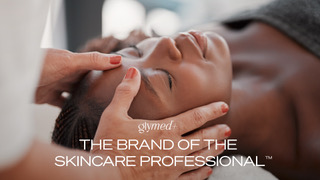
When a new client sits down in my treatment room at The Skin Tune, I almost always ask to see a photo of their current skincare shelf. And almost every time, I see the same thing: a beautiful, curated collection of products from Sephora, Ulta, or the department store — $300, maybe $400 worth of skincare — that isn't doing what it promises.
This isn't their fault. The skincare industry is remarkable at marketing. But there's a fundamental difference between cosmetic-grade and professional-grade skincare that nobody talks about — and understanding it will change how you shop forever.
The three tiers of skincare (and why most people are in the wrong one)
| Tier 1: Drugstore / Mass market | Tier 2: Cosmetic / Prestige | Tier 3: Professional-grade |
|---|---|---|
Moisturizes, little else |
Maintenance-level results |
Corrective-level results |
Professional-grade skincare isn't just "better quality" — it's formulated at concentrations that are actually proven to create change in the skin's structure. The active ingredients are present at levels that do something. This sounds obvious, but it's genuinely not how most skincare is formulated.
The concentration problem
Here's the thing about ingredients like Vitamin C (L-ascorbic acid): clinical research shows it needs to be present at a concentration of roughly 10–20% and at a low pH to actually penetrate the skin and deliver antioxidant and collagen-stimulating benefits. Below that threshold, you're essentially putting tinted water on your face.
Most over-the-counter Vitamin C serums contain 5% or less — sometimes far less. And because they're cosmetic-grade, they're not required to disclose exact concentrations. The word "Vitamin C" on a $120 serum could mean almost anything.
This plays out with every key anti-aging ingredient:
- Retinol — Effective clinical concentrations start at 0.3%. Many OTC products contain 0.01–0.1%.
- Glycolic Acid — At-home AHAs are typically pH-buffered to reduce efficacy for safety (and shelf life). Professional-grade formulations deliver real exfoliation.
- Peptides — Need specific peptide sequences, correct ratios, and the right delivery system to signal collagen production. Most "peptide serums" have a token peptide in a long ingredient list.
- Niacinamide — Effective at 5%+; many products contain 1–2% with no disclosure.
10–20%
Minimum Vitamin C concentration for clinical efficacy
0.3%+
Minimum retinol needed to measurably stimulate collagen
pH 6.0
Maximum pH for glycolic acid to actually exfoliate skin
Why I chose GlyMed Plus
I've worked with a lot of skincare lines. I chose GlyMed Plus for The Skin Tune because of one non-negotiable: it works. GlyMed Plus formulates at professional-grade concentrations with a clinical approach to ingredient delivery. Every product in the line has a purpose and a provable mechanism of action.
Here's what sets GlyMed Plus apart from cosmetic-grade brands:
- Exclusively dispensed through licensed professionals. You can't buy it at Sephora. This isn't about scarcity — it's because the formulations require professional guidance to use correctly and safely.
- Actives at therapeutic concentrations. Their Mega Vitamin C Serum delivers L-ascorbic acid at a clinically significant level with the appropriate pH for penetration. Their retinol formulations are stable and properly buffered.
- No fillers for show. GlyMed Plus ingredient lists are lean and purposeful. You're not paying for fragrance, artificial dyes, or eight types of conditioning agents.
- Tested on real skin types. The line is designed for corrective outcomes — acne, hyperpigmentation, aging, rosacea — not just maintenance.
My 4-step philosophy: I build every client's home care plan around four essentials — cleanse, treat, moisturize, protect. Every product I recommend has a specific job to do. If it doesn't have a job, it doesn't make the routine.
What this means for your routine
You don't need to spend more money on skincare. You need to spend it better. In most cases, when I help a client simplify their routine to 4–5 professional-grade products chosen for their specific skin, they spend less than they were before — and see dramatically better results within 60–90 days.
The math is simple: a $55 serum with 15% L-ascorbic acid will outperform a $90 serum with 3% L-ascorbic acid every single time. The expensive-looking packaging doesn't brighten your skin. The ingredient does.
Want a custom GlyMed Plus routine? I don't sell products from a shelf — I build routines based on your actual skin assessment. Every recommendation comes with instruction on how to use it, in what order, and why. Book a consultation
The bottom line
Professional-grade skincare is not a luxury — it's a different category. If you've been frustrated by your results despite "doing everything right," the issue is almost certainly concentration. You're using the right ingredients at ineffective levels.
The products I carry at The Skin Tune — GlyMed Plus — are not available in stores, and that's by design. They're formulated to create real, measurable change in the skin. Paired with the right clinical treatments, a properly-built home care routine is the most powerful investment you can make in your skin.
If you're in Bergen County and want an honest assessment of your current routine, book a consultation. I'll look at what you're using, what's working, and where your money is going to waste — and we'll build something that actually moves your skin forward.
Ready to upgrade your skincare routine?
Book a consultation and I will build you a professional-grade routine tailored to your skin, your concerns, and your goals. No guesswork, no generic recommendations.
Book Your ConsultationOr call me at (201) 846-7854