
By Kristen Hansen, Licensed Esthetician | May 18, 2026 | 7 min read
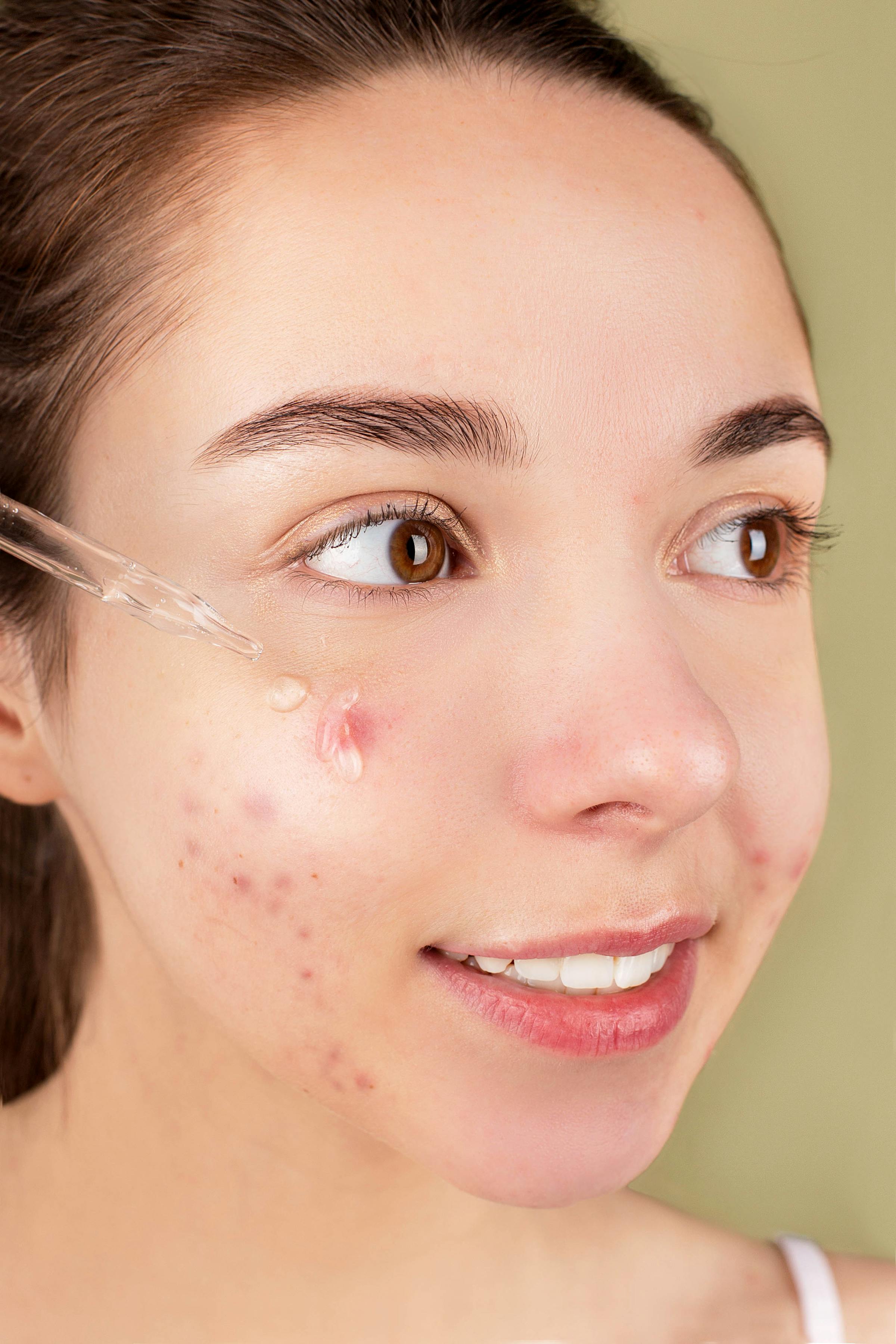
Every day I have clients sit down in my treatment room and tell me some version of the same thing: "I feel like I'm doing everything right, but I'm not seeing results." And when I look at what they're using at home — expensive department store creams, trendy serums, half a dozen products layered on in the wrong order — I get it. The anti-aging skincare industry is a $60 billion maze built to confuse you.
So let's cut through it. This is what I tell my clients at The Skin Tune about aging skin — what's actually happening, what ingredients move the needle, and what clinical treatments are worth your time (and which aren't).
What's actually happening to your skin as you age
Aging skin isn't just about wrinkles. It's a cascade of biological shifts that happen at every layer of the skin. Understanding this changes how you approach your routine.
- Cell turnover slows. In your 20s, skin renews roughly every 28 days. By your 40s, that can stretch to 45–60 days — meaning dull, uneven skin sits on the surface longer.
- Collagen production declines. After 25, you lose about 1% of collagen per year. After menopause, that accelerates significantly. Collagen is what gives skin its bounce and density.
- Lipid barrier weakens. The skin's natural moisture barrier becomes less efficient, leading to dryness, sensitivity, and fine lines that weren't there before.
- Melanin distribution shifts. Sun damage accumulated over years begins to surface as hyperpigmentation, dark spots, and uneven tone.
- Volume shifts. Fat pads under the skin migrate downward, changing facial contours and creating hollowness where you don't want it.
None of this is a crisis — it's biology. But it does mean that what worked at 25 won't work at 45, and your routine needs to evolve.
Your skin by decade
| 30s | 40s | 50s+ |
|---|---|---|
| Prevention + maintenance First fine lines at expression areas, slight loss of glow, start of mild hyperpigmentation |
Correction + rebuilding Deeper expression lines, collagen visibly reduced, hormonal shifts affect skin |
Nourish + restore Significant moisture loss, volume changes begin, skin becomes thinner |
| Focus: Retinoids, SPF, Vitamin C Treatments: HydraFacial, Dermaplaning |
Focus: Retinol, AHAs, peptides Treatments: Chemical peels, LED |
Focus: Barrier repair, peptides, growth factors Treatments: Advanced peels, Glacial fx |
The 80/20 rule: At The Skin Tune, I always tell clients that 80% of your skin results come from what you do at home every single day. Your clinical treatments are the 20% that accelerates and amplifies your home care. You can't out-treat a bad routine.
Ingredients that actually work for aging skin
I'm a GlyMed Plus studio, and professional-grade skincare changes the conversation entirely. Here's an honest breakdown of anti-aging ingredients and what the science actually says:
| Ingredient | What it does | Evidence | Worth it? |
|---|---|---|---|
| Retinoids / Retinol | Speeds cell turnover, stimulates collagen | Gold standard — 40+ years of research | Yes |
| Vitamin C (L-Ascorbic) | Antioxidant, brightens, protects collagen | Strong clinical support for topical use | Yes |
| Peptides | Signal skin to produce collagen | Good evidence, especially combined | Yes |
| Hyaluronic Acid | Draws moisture into skin | Excellent hydration, not a "filler" | Yes |
| Growth Factors | Cellular repair and regeneration | Emerging, strong early research | Yes |
| AHA/BHA Exfoliants | Remove dead cells, improve tone | Well-established, use with care | Yes |
| Collagen creams | "Replenish" collagen topically | Collagen molecules too large to penetrate | No |
| "Luxury" moisturizers | Hydration + marketing | Price does not equal efficacy. Check ingredients | Skip |
Why professional-grade matters: The concentration and stability of actives like Vitamin C or retinol vary wildly between brands. A $90 Vitamin C serum from a department store may contain a fraction of the active ingredient needed to see results. GlyMed Plus products are formulated at efficacious concentrations — that's the difference between results and hope.
The anti-aging routine order that actually makes sense
Layering products incorrectly is one of the most common mistakes I see. Here's a simplified morning and evening framework:
Morning
- Gentle cleanser — Don't strip your barrier in the AM
- Vitamin C serum — Antioxidant protection before UV exposure
- Moisturizer with peptides — Support collagen and hydrate
- SPF 30+ (non-negotiable) — Sunscreen is your #1 anti-aging product
Evening
- Double cleanse if wearing SPF/makeup
- Retinol or treatment serum — PM only; start 2x/week
- Rich moisturizer or face oil — Skin repairs overnight
Simple. Consistent. That's what works. Most clients are using 8 products when they'd see better results with 4 used correctly.
Clinical treatments worth your investment for aging skin
HydraFacial — the gateway treatment
HydraFacial is often underestimated as "just" a hydration treatment, but the vortex technology delivers actives deep into the skin while simultaneously removing the dead surface layer that's slowing your cell turnover. For aging skin, I love pairing it with growth factor or peptide boosters. It's safe for all skin types year-round, shows immediate results, and has zero downtime. Start here if you've never had a professional facial.
Chemical peels — the workhorse
A well-formulated chemical peel is one of the most powerful anti-aging tools in professional skincare. Depending on your skin and goals, I might recommend a gentle AHA/BHA peel for maintenance, a Jessner peel for deeper resurfacing, or a TCA peel for significant texture and tone correction. Peels stimulate collagen, accelerate cell turnover, and are especially effective for hyperpigmentation and fine lines.
The key word is consultation-first. A peel that's wrong for your skin does more harm than good. I assess before I treat, always.
Glacial fx CryoFacial — the anti-inflammatory approach
This is one I'm particularly excited about for mature skin. Glacial fx uses controlled cryo-technology to reduce inflammation, tighten pores, and stimulate the natural healing response that rebuilds collagen — without heat, chemicals, or downtime. Ideal for sensitive, rosacea-prone, or reactive aging skin that can't tolerate stronger peels.
The biggest anti-aging myth I bust daily
The #1 thing my clients believe that isn't true: "It's too late to start."
The skin is extraordinarily resilient. Research consistently shows that even clients who start a corrective skincare routine in their 50s and 60s see measurable improvements in texture, tone, and hydration within 8–12 weeks. The skin never stops responding to the right inputs. Starting now — wherever you are — is always the right move.
Ready to build your plan? Every skin is different, and aging looks different on every face. A consultation at The Skin Tune gives me the chance to actually look at your skin — not a quiz result — and map out a home care and treatment plan that matches your specific concerns and lifestyle. New clients start with a 45-minute consultation or clinical facial.
The bottom line
Anti-aging skincare doesn't need to be complicated. It needs to be consistent, well-formulated, and matched to your actual skin — not your skin type from a packaging questionnaire. Start with a solid home care routine, add clinical treatments strategically, and stop spending money on products whose main ingredient is marketing copy.
If you're in Bergen County and ready to build a real plan, I'd love to see you in the studio. The Skin Tune is a private, one-on-one space in Ramsey — no rushing, no upselling, just real skincare from a licensed esthetician who geeks out on this stuff.
Ready to build a real anti-aging plan?
Book a consultation and I will analyze your skin, walk you through what is happening and why, and create a treatment and home care plan that fits your goals and your life.
Book Your ConsultationOr call me at (201) 846-7854